
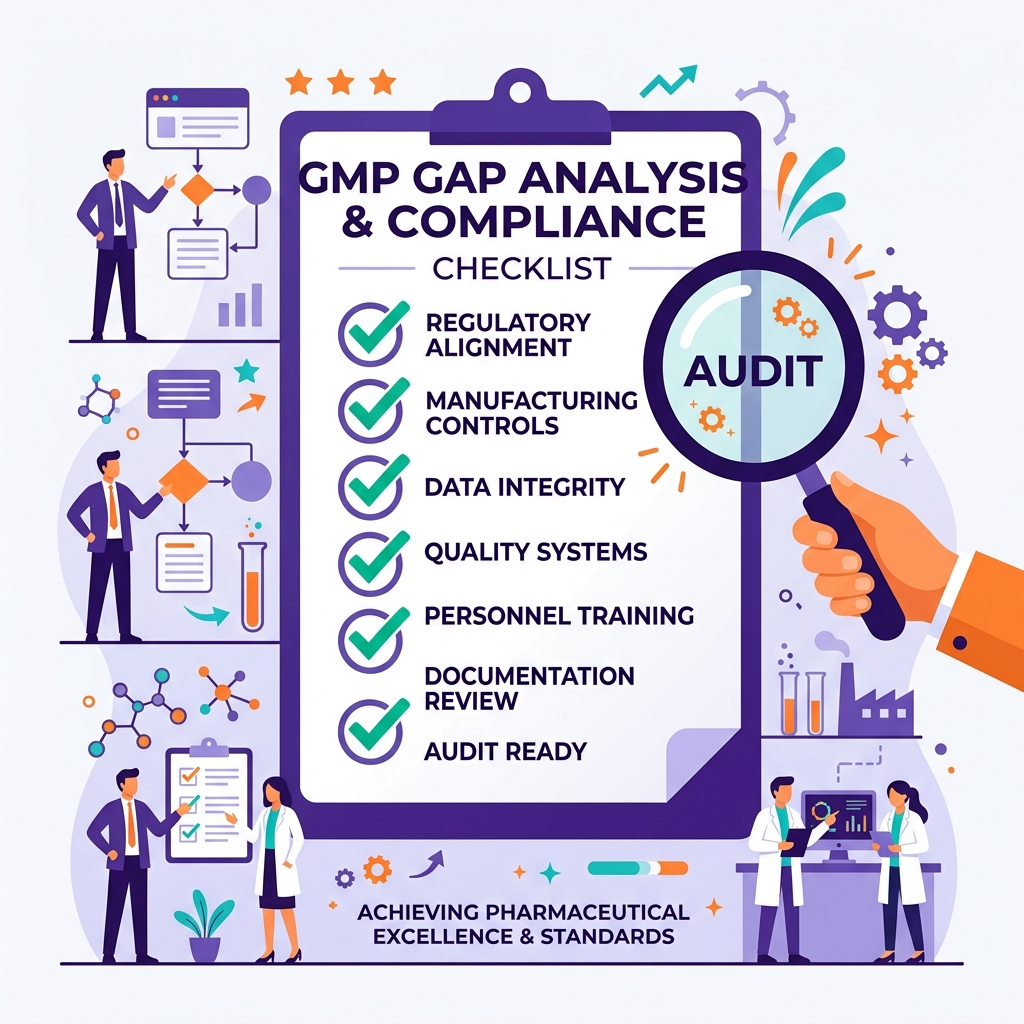
GMP Gap Assessment: A Complete Step-by-Step Guide
Introduction to GMP Gap Assessment
A GMP gap assessment is a systematic process to identify differences between a pharmaceutical facility's current practices and the requirements of applicable regulatory standards such as US FDA 21 CFR Parts 210/211, WHO GMP guidelines, ICH Q10, and EMA guidelines.
Why Conduct a Gap Assessment?
Before any regulatory inspection — whether it's a US FDA pre-approval inspection (PAI), a WHO GMP audit, or an EMA inspection — a thorough gap assessment enables manufacturers to identify and remediate compliance deficiencies proactively rather than reactively.
Step 1: Define the Assessment Scope
Begin by clearly defining what parts of the facility and operations will be assessed. This includes manufacturing areas, quality systems, laboratory operations, documentation controls, equipment qualification, and personnel training programs. A scoped assessment ensures resources are directed where risk is highest.
Step 2: Build a Regulatory Reference Matrix
Create a comprehensive matrix mapping every applicable GMP requirement to the corresponding internal procedure or practice. For US FDA-regulated facilities, this means mapping 21 CFR 211.68 (computers), 211.100 (procedures), 211.186 (master production records), and so on.
Step 3: Conduct On-Site Walkthrough
Walk through each production area, warehouse, and laboratory with checklists derived from your regulatory reference matrix. Document observations including deviations, near-misses, and areas of partial compliance.
Step 4: Interview Key Personnel
Assess the depth of GMP knowledge among operators, supervisors, and QA staff. Gaps in training or understanding of procedures are frequently cited in regulatory observations.
Step 5: Document Review
Review batch records, SOPs, deviation logs, CAPA records, change control documents, and vendor qualification files. Incomplete or inconsistent documentation is a primary compliance gap in most facilities.
Step 6: Risk-Based Gap Ranking
Once identified, gaps should be classified by risk level: Critical (direct patient safety risk), Major (significant regulatory violation), and Minor (cosmetic or documentation issues). This prioritization drives your remediation roadmap.
Step 7: Develop a CAPA-Driven Remediation Plan
Each identified gap should have a corresponding Corrective Action and Preventive Action (CAPA) assigned, with defined owners, target dates, and effectiveness check criteria. Track all CAPAs in your quality management system.
Conclusion
A well-executed GMP gap assessment is the foundation of robust regulatory compliance. QualyInc specializes in conducting thorough, risk-based gap assessments for pharmaceutical manufacturers preparing for US FDA, WHO, MHRA, and EMA inspections. Contact our team to schedule your assessment.
Subscribe to our monthly GMP newsletter
Receive Hyderabad pharmaceutical regulatory updates directly to your inbox.
Join Newsletter List